SyndicatedEducation
New England not likely to see nuclear power revival any time soon
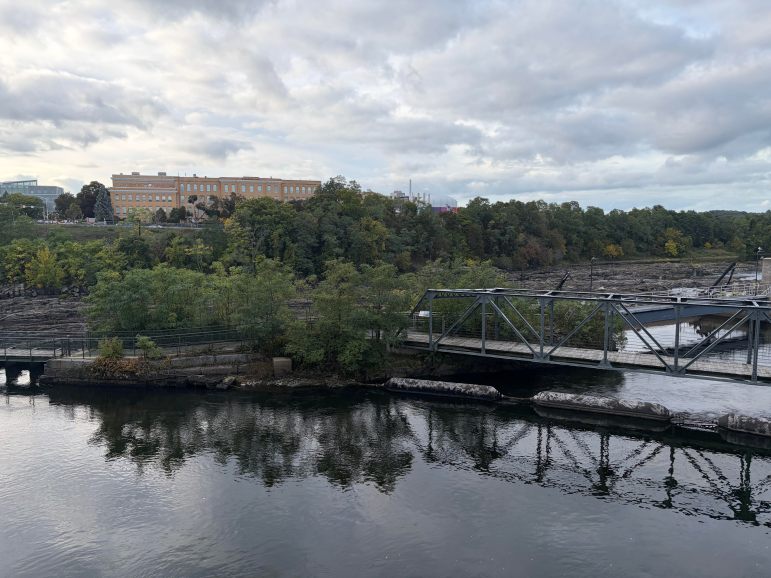
A rocky river surrounded by a dam, iron truss bridge and old brick campus buildings.
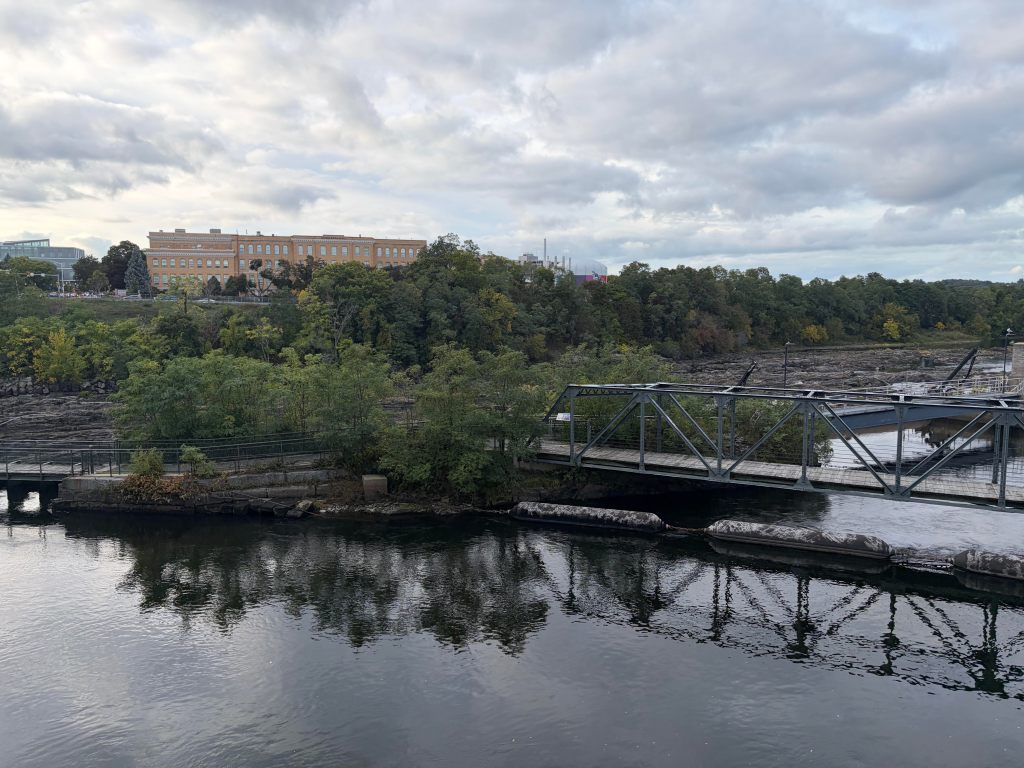
A rocky river surrounded by a dam, iron truss bridge and old brick campus buildings.
" data-image-caption="The Merrimack River, a source of New England’s early industrual power, flows through the campus of the Unversity of Massachusetts, Lowell, where officials from the six-state region gathered Wednesday for a summit on nuclear power. The building in the background houses one of three university research reactors in New England.
" data-large-file="https://ctmirror.org/wp-content/uploads/2026/10/Merrimack-771x578.jpg" /> The long-anticipated renaissance of American nuclear power is unlikely to get its start in New England.
Lack of demand from data centers, high costs for labor and materials, unseemly battles with neighbors and — perhaps most importantly — uncertain financial options are all pushing developers of new nuclear technologies elsewhere, particularly to the Deep South and Midwest.
But as leaders across the region face rising demand for electricity and few options for delivering that power on-demand without fossil fuels, many are beginning to turn to nuclear as a possible solution, albeit one that is years or even decades away.
On Wednesday, officials from all six New England states gathered at the University of Massachusetts in Lowell for a summit on the revival of nuclear power in the region. The event was hosted the National Governor’s Association and featured scientists, clean-energy advocates and industry representatives, along with state officials.
The summit was born, in part, out of a public letter signed by the governors off all six states in March. The letter called for greater regional collaboration to keep New England’s remaining nuclear stations operational and to identify potential locations for expansion.
The location was symbolic for two reasons. The Merrimack River, which flows through the center of campus, was itself the power source that fueled the region’s early industrial rise. UMass-Lowell is also home to one of the few operating university research reactors located in the United States.
“It’s been a while since there was a new energy and a new opportunity like this,” said Emma Cimino, the acting commissioner of the Department of Energy and Environmental Protection who led a small delegation of state officials at the summit.
“All of our states have had some association with nuclear,” she added. “I think we’re all sort of hoping that leads to a little bit more openness to especially some of these new technologies that may not be these big, hulking, kind of traditional nuclear facilities that maybe conjure fears in people’s minds.”
As recently as 1990, New England was home to eight operating nuclear power plants with a combined output of over 7,000 megawatts of electricity. The cost of maintenance on those aging plants, combined with competition from cheap natural gas, contributed to a succession of closures over the next several decades that whittled the number of plants to two: Millstone Nuclear Power Station in Waterford and Seabrook Station in New Hampshire.
Together, Millstone and Seabrook’s three reactors have an output of nearly 3,300 megawatts, or about one-quarter of all the electricity produced in New England.
Efforts to restart commercial production of nuclear power elsewhere in the country have been repeatedly stalled by technical problems and cost overruns. Only two new reactors have entered service in the U.S. in the last decade, both at Georgia’s Vogtle Electric Generating Plant.
The Vogtle project was completed in 2024 at a total cost of over $30 billion and several years behind schedule.
Strategic challenges
Proponents of nuclear power have pinned much of their hopes on the development of a new generation of small modular reactors that can be built from standardized designs to help lower costs. Dozens of companies are vying to complete designs, and early prototypes are under construction in Tennessee and Wyoming.
For similar projects to get underway in New England, however, developers and state officials say they need to figure out a way to address some of the region’s unique political and economic barriers to nuclear power.
Massachusetts, Maine, Rhode Island and Vermont all have restrictions in place that require voter or legislative approval to construct any new nuclear reactor. In Massachusetts and Maine, that approval is also contingent on the federal government finding a long-term solution to the seemingly intractable problem of storing radioactive nuclear waste.
Connecticut lawmakers partially repealed the state’s own nuclear moratorium in 2022, allowing for the development of a new reactor at the Millstone site. Two years later, the legislature went one step further, allowing any city or town to hold a vote on whether to host “advanced” reactor technology.
So far, no municipality has exercised that option.
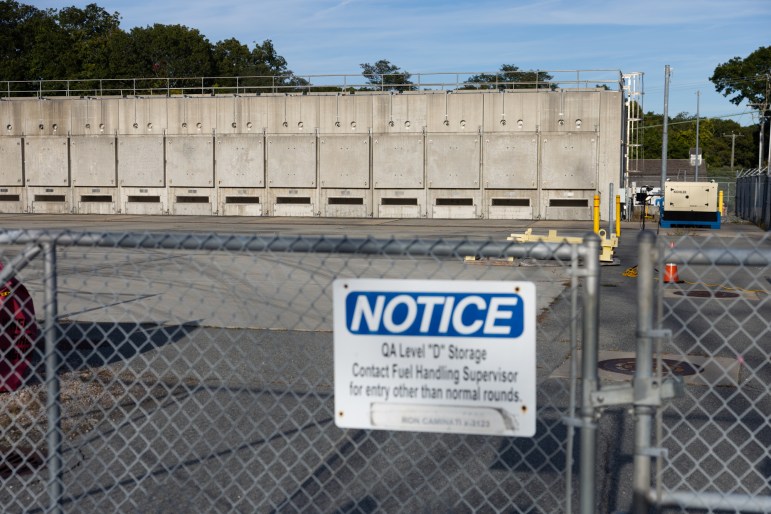
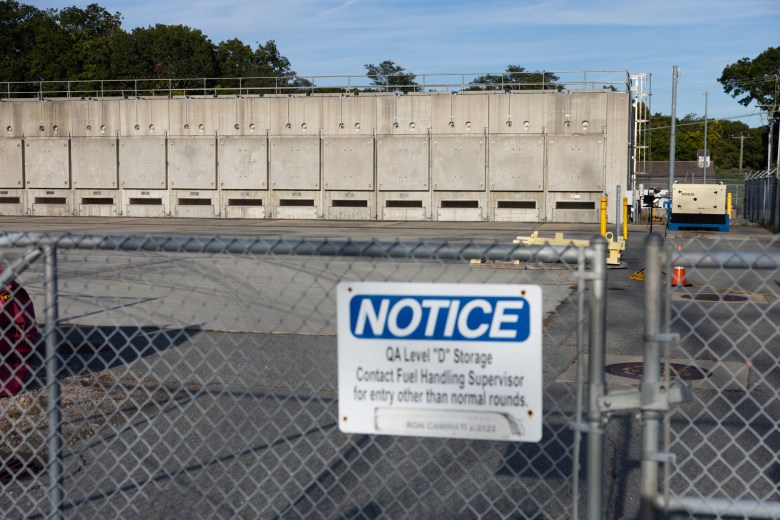
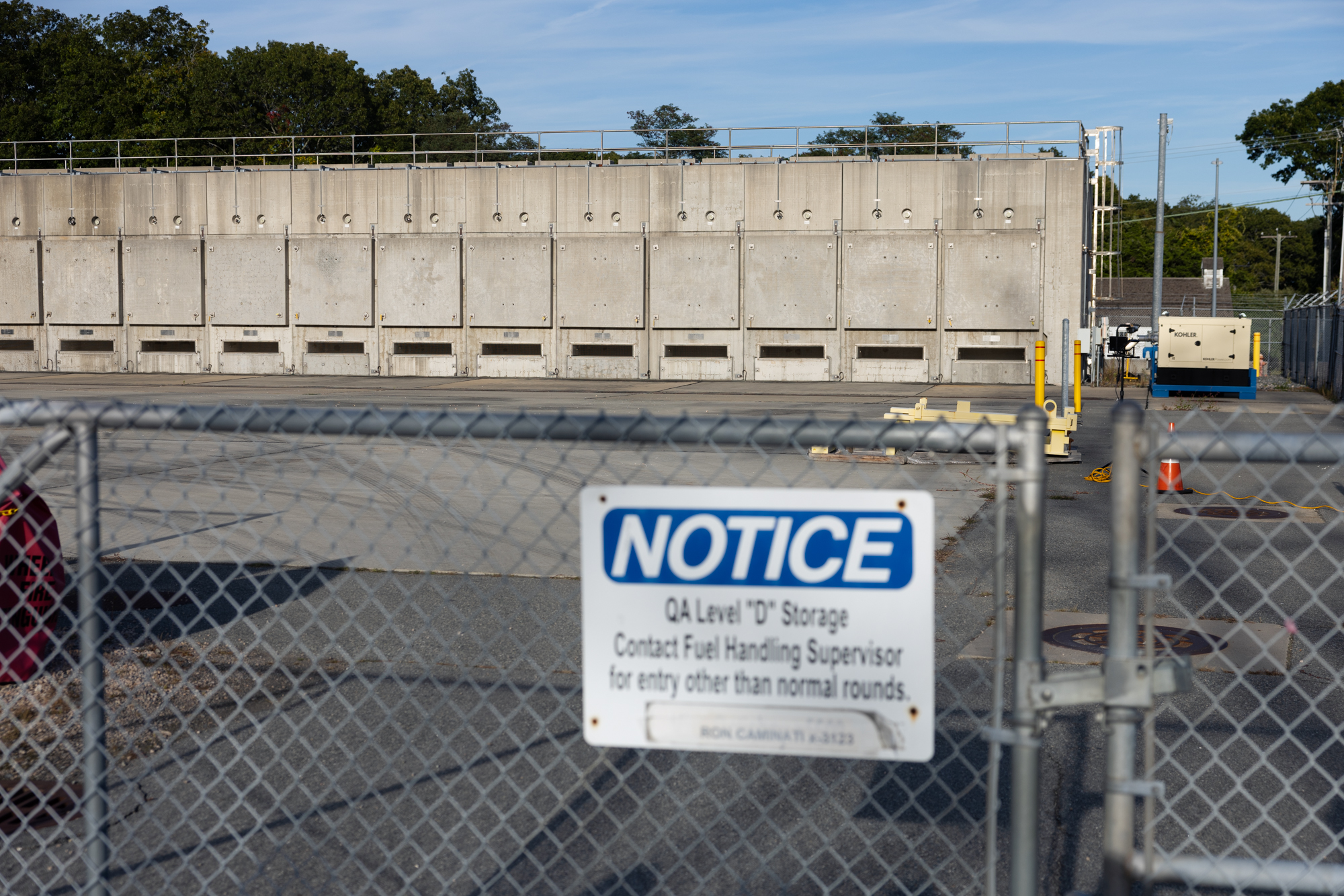
A dry cask storage facility for spent nuclear fuel on Millstone’s property on October 2, 2025.
" data-large-file="https://ctmirror.org/wp-content/uploads/2025/10/2025_1002_SR_MillstoneTour_219-771x514.jpg" src="https://ctmirror.org/wp-content/uploads/2025/10/2025_1002_SR_MillstoneTour_219-771x514.jpg" alt="" class="wp-image-1139928" srcset="https://ctmirror.org/wp-content/uploads/2025/10/2025_1002_SR_MillstoneTour_219-771x514.jpg 771w, https://ctmirror.org/wp-content/uploads/2025/10/2025_1002_SR_MillstoneTour_219-336x224.jpg 336w, https://ctmirror.org/wp-content/uploads/2025/10/2025_1002_SR_MillstoneTour_219-768x512.jpg 768w, https://ctmirror.org/wp-content/uploads/2025/10/2025_1002_SR_MillstoneTour_219-1536x1025.jpg 1536w, https://ctmirror.org/wp-content/uploads/2025/10/2025_1002_SR_MillstoneTour_219-1200x800.jpg 1200w, https://ctmirror.org/wp-content/uploads/2025/10/2025_1002_SR_MillstoneTour_219-1024x683.jpg 1024w, https://ctmirror.org/wp-content/uploads/2025/10/2025_1002_SR_MillstoneTour_219-780x520.jpg 780w, https://ctmirror.org/wp-content/uploads/2025/10/2025_1002_SR_MillstoneTour_219-400x267.jpg 400w, https://ctmirror.org/wp-content/uploads/2025/10/2025_1002_SR_MillstoneTour_219.jpg 2000w" sizes="(max-width: 771px) 100vw, 771px" />
Ed Lyman, the director of nuclear power safety at the Union of Concerned Scientists, dismissed the notion that nuclear power offers a realistic solution to New England’s rising energy needs over the next decade.
In addition to old fears about safety that make it difficult to site nuclear facilities within a densely populated region, Lyman said that much of the current interest in nuclear is being driven by startups and unproven technologies that have yet to show they can be cost-competitive with other sources of power.
“It’s the industry’s own problems in strategic planning and … coming up with ways to realistically finance these things instead of a lot of hot air and hoping that if they generate enough steam or generate enough heat about this that investors will come,” Lyman said. “I think we’re still in that that space where it’s mostly being driven by hype and PR, and not by fundamentals.”
Another hurdle in New England’s quest for new nuclear power is the fact that each of the states, with the exception of Vermont, have adopted deregulated energy markets that generally prohibit public utilities — such as Eversource and United Illuminating — from owning their own power plants while also selling power to customers. All of the region’s existing reactors were built by utilities prior to deregulation.
Dominion Energy, the Virginia-based company that owns Millstone, has focused its development of small modular reactors in states with fully regulated electricity markets, which provide a more direct path to recouping upfront costs from ratepayers.
Dominion is also in the process of being sold to NextEra Energy, which would create one of the world’s largest power utilities. NextEra is the owner of Seabrook Station, raising concerns from some New England officials that the sale would give the combined company a monopoly over nuclear power in the region. Earlier this week, Connecticut Attorney General William Tong filed a formal opposition to the merger with federal regulators.
“Right now, we’re just focused on the continued safe operation of Millstone,” Dominion spokesman Ryan Frazier said in a statement Thursday. “Until the merger closes, Dominion and NextEra will continue to operate independently. Beyond that, no decisions have been made. Both companies are proven, high-quality nuclear operators.”
Neil Nissan, a spokesman for NextEra, said in a statement that the company has a “dedicated team” exploring new nuclear technologies, including small modular reactors, but has not announced any plans for expanding Seabrook Station.
“NextEra Energy continuously evaluates opportunities to meet growing energy demand across the country, including in New England,” Nissan said.
Cimino, of DEEP, said Wednesday that one of her key takeaways from the conference was the need to understand developers’ concerns about New England’s energy markets and develop new financing and risk management structures to help attract investment.
“I think that that’s something that we, individually as states, and collectively need to drill in on as we continue to explore this technology,” Cimino said.
At the federal level, officials and Congress are continuing to search for locations that could serve as interim storage sites for spent nuclear fuel until a permanent repository can be built. Currently, the spent fuel from nuclear power plants, including decommissioned plants, is stored on location in concrete casks. Earlier this year, Department of Energy signed agreements with six states to further explore the development of spent-fuel recycling or disposal facilities. (One of those states, West Virginia, dropped out of consideration in September).
“With renewed investment and support for nuclear power as a clean energy source, there is an opportunity to reuse spent fuel and significantly shrink the volume of material that requires disposal,” U.S. Rep. Joe Courtney, D-2nd District, said in a statement this week. “There is still much work to be done, but Congressional support is strong to move the spent fuel initiative that has occurred over multiple administrations.”
Raising hands
At Wednesday’s summit, Cimino participated in a panel featuring representatives from the six New England states. Each expressed an interest, to some degree, in either hosting a new nuclear facility or providing financial support to make such an expansion happen.
One area that garned a lot of interest was the town of Waterford, which has hosted Millstone since the 1970s.
Waterford First Selectman Robert Brule also attended the summit to spread the word that his town is open to new nuclear development. He said he met with three different developers who are seeking potential locations to build advanced reactors. (Brule declined to name the developers, citing the preliminary nature of their discussions).
Part of the reason for his town’s interest, Brule said, is the need to make up for shrinking tax revenues from Millstone, which experienced a decline in property values following deregulation. Prior to deregulation, Millstone made up about 64% of the town’s overall tax revenues, according to The Day of New London. That figure has since fallen to around one-third of revenues.
In order to fill that gap, Brule said, the town had previously explored hosting a large data center that would draw about 300 MW of electricity directly from Millstone. That plan fell apart due to public opposition and difficulty executing a host-fee agreement, and Brule told the Connecticut Mirror on Thursday he had no plans of reviving the data center project as long as he is in office.
“We’d rather produce the energy now than produce a project that sucks up the energy,” Brule said.
Acting DEEP Commissioner Emma Cimino (far left) participates in a panel on the future of nuclear energy with officials from other New England states at the University of Massachusetts, Lowell on Wednesday, Sept. 30, 2026.
" data-large-file="https://ctmirror.org/wp-content/uploads/2026/10/unnamed-771x578.jpg" src="https://ctmirror.org/wp-content/uploads/2026/10/unnamed-771x578.jpg" alt="" class="wp-image-1182453" srcset="https://ctmirror.org/wp-content/uploads/2026/10/unnamed-771x578.jpg 771w, https://ctmirror.org/wp-content/uploads/2026/10/unnamed-336x252.jpg 336w, https://ctmirror.org/wp-content/uploads/2026/10/unnamed-768x576.jpg 768w, https://ctmirror.org/wp-content/uploads/2026/10/unnamed-1536x1152.jpg 1536w, https://ctmirror.org/wp-content/uploads/2026/10/unnamed-2048x1536.jpg 2048w, https://ctmirror.org/wp-content/uploads/2026/10/unnamed-1200x900.jpg?crop=1 1200w, https://ctmirror.org/wp-content/uploads/2026/10/unnamed-800x600.jpg?crop=1 800w, https://ctmirror.org/wp-content/uploads/2026/10/unnamed-600x450.jpg?crop=1 600w, https://ctmirror.org/wp-content/uploads/2026/10/unnamed-400x300.jpg?crop=1 400w, https://ctmirror.org/wp-content/uploads/2026/10/unnamed-200x150.jpg?crop=1 200w, https://ctmirror.org/wp-content/uploads/2026/10/unnamed-1024x768.jpg 1024w, https://ctmirror.org/wp-content/uploads/2026/10/unnamed-2000x1500.jpg 2000w, https://ctmirror.org/wp-content/uploads/2026/10/unnamed-780x585.jpg 780w" sizes="(max-width: 771px) 100vw, 771px" />
Brule said Waterford benefits from having residents who are familiar with the realities — and potential risks — of living next to a nuclear power plant. Town officials also undergo regular emergency preparedness training and are in frequent contact with Dominion, he said. As for other potential locations in Connecticut, Cimino said that DEEP has been “laying the ground work” to engage with local officials and community members about their interest in nuclear development.
The 2024 law that allowed municipalities to volunteer to host a new reactor also set aside $5 million in state bonds to establish “site readiness” funding program. That fund can be used to help pay for things such as preliminary technical or environmental studies, community engagement initiatives or other expenses deemed necessary by DEEP.
“There’s about 40 criteria that you got to go through” to determine if a particular location is suitable for a nuclear power plant, according to Jeff Semancik, the director of DEEP’s radiation division. Those criteria include having an adequate footprint, ground seismology and access to large quantities of water.
“We kind of know if a site had nuclear before that’s probably pretty good,” Semancik added. “We don’t know in some of these other sites if it would fit, and so I think [the fund is] kind of helping to do it.”
Cimino said that funding should be available for grants sometime within the next six months.
Another enthusiastic response at Wednesday’s summit came from Vermont, formerly home to the 650 MW Vermont-Yankee Nuclear Power Plant, which closed in 2014. Workers are in the midst of disassembling the old plant, a process that is expected to be completed next year. At that point, Kerrick Johnson, the commissioner of the Vermont Department of Public Service, said the site will become a “ready-made asset” for new nuclear development, with existing access to transmission lines, rail networks and community that is familiar with living next to a reactor.
“The community agrees, we and our department agree, the state, our governor [Phil Scott] agrees, and the region, initially, agrees,” Johnson said. “The collaborative role we can serve — as Vermont has traditionally served — is to go first.”
Johnson added that he hopes officials in surrounding states are driven by the urgency to tackle region-wide challenges posed by climate change, electrification and rising power costs.
“You start now, you’re talking about 2032, 2035,” before anything is finished, he said. “So you’ve got to start now.”